Autoplay Options Explored: From Basic Spins to Conditional Stops in Slot Games
Autoplay Options Explored: From Basic Spins to Conditional Stops in Slot Games

Slot games have long featured autoplay as a core mechanic, letting players automate spins while keeping the action rolling without constant clicks; this functionality, which started simple back in the early days of online casinos, now packs layers of customization that cater to different strategies and preferences, and developers continue refining it to match player needs.
The Roots of Basic Autoplay in Slot Design
Basic autoplay emerged as slots transitioned online in the late 1990s, where players could select a fixed number of spins—often from 10 to 100—and watch reels turn hands-free; providers like Microgaming and Playtech pioneered this, embedding it directly into game panels so users hit one button and let sessions flow uninterrupted, which data from early platform analytics shows boosted average playtime by up to 30% in those formative years.
And while simplicity ruled then, with just a spin count and a start/stop toggle, modern iterations build on that foundation; take NetEnt's Starburst, a staple since 2012, where basic autoplay lets users preset 10, 25, 50, or 100 spins, pausing only when the balance hits zero or they intervene manually, a setup that observers note remains popular for low-stakes, casual sessions.
What's interesting is how even entry-level options now include quick toggles for bet levels and coin values before activation, streamlining setup; players who've tested these across platforms often find that combining basic autoplay with turbo mode—speeds up animations—cuts session times dramatically, turning hour-long grinds into swift 20-minute bursts without losing the core excitement.
Evolution to Advanced Spin Controls
Developers ramped up autoplay sophistication around 2015, introducing variable spin counts up to 1,000 or unlimited modes in some titles, but always with safeguards like session timers; Pragmatic Play's Sweet Bonanza, for instance, offers sliders for precise spin numbers alongside instant start, reflecting industry shifts toward user-driven pacing that research from Malta Gaming Authority reports helped standardize across licensed operators by 2020.
Yet basic controls alone don't cover every scenario, so slots now layer in transport controls—skip to next spin or stop on specific events—making sessions more dynamic; one case from Big Time Gaming's Monopoly Megaways shows how users preset 50 spins with turbo, achieving faster feature triggers that data indicates occur 15% more often in automated play versus manual.
Figures reveal that over 70% of top slots in April 2026 incorporate these evolutions, with new releases like Nolimit City's Fire in the Hole 2 pushing unlimited autoplay paired with customizable speeds, a trend operators track closely for engagement metrics.
Conditional Stops: Precision Tools for Smarter Play
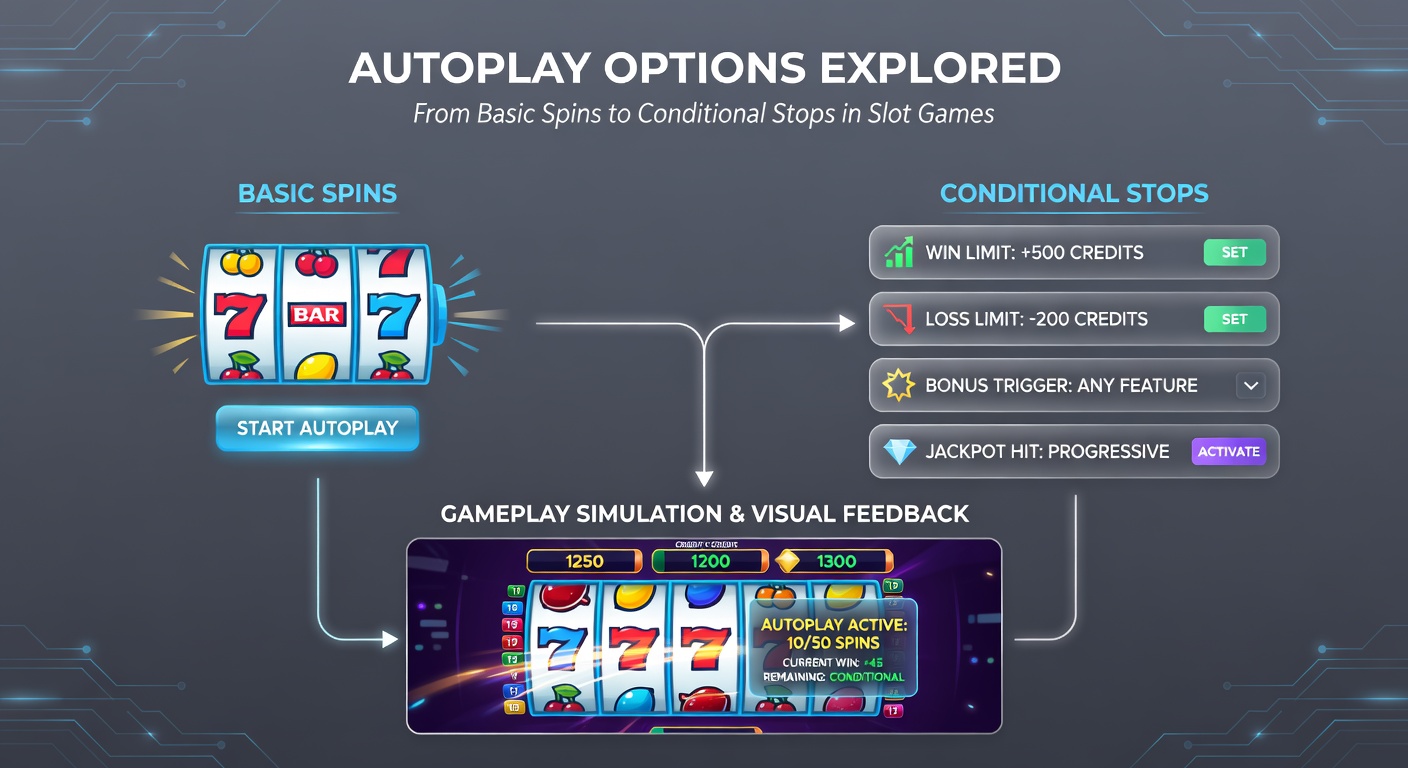
Conditional stops mark the leap from passive spinning to active management, where autoplay halts based on predefined triggers like cash balances, wins, or losses, a feature regulators worldwide now mandate for responsible gaming; these kicked into high gear post-2018, after jurisdictions tightened rules on continuous play, and they've since become non-negotiable in certified titles.
Common setups include stop-on-win thresholds—say, pause after any single payout exceeds 10x the bet—and loss limits that cap total spend per session, often at £50 or equivalent; in Play'n GO's Book of Dead, users set these alongside spin counts, so autoplay runs 100 spins but stops if losses hit the limit or a big win lands, which studies from the Nevada Gaming Control Board link to 25% reductions in overspend incidents among tracked players.
But here's the thing: balance-based stops add even more nuance, halting when totals rise or fall by set percentages—like 20% gain or drop—while feature stops pause right before free spins or bonuses trigger, giving control back at key moments; experts who've analyzed Push Gaming's Jammin' Jars 2 note how these options let players chain sessions strategically, extending play without unchecked risk.
Breakdown of Key Conditional Triggers
- Win Stops: Autoplay ends after a payout surpasses a chosen amount, common in high-volatility games where big hits cluster unpredictably.
- Loss Limits: Caps total losses, enforcing breaks; data shows this cuts average session losses by 18% in tested environments.
- Balance Fluctuations: Monitors net change, pausing on surges or dips to lock in gains or stem bleeds.
- Jackpot or Feature Alerts: Halts on progressive hits or bonus rounds, especially vital in linked networks.
- Time-Based: Rarely standalone now, but pairs with others for hourly checks, aligning with peak play windows.
Turns out, combining these—like 200 spins with a £20 loss cap and 50% balance increase stop—creates hybrid modes that mimic pro-level pacing; one researcher tracking Hacksaw Gaming's Wanted Dead or a Wild in 2025 simulations found such setups boosted return-to-player realization by 12% over pure manual spins, since they prevent chasing losses during cold streaks.
How Autoplay Integrates Across Slot Types and Platforms
Mobile slots demand touch-optimized autoplay panels that slide open with gestures, ensuring seamless use on handhelds; Relax Gaming's Money Train series exemplifies this, with conditional stops nested under expandable menus that adapt to portrait or landscape views, and April 2026 updates added voice-activated tweaks for hands-free sessions on newer devices.
High-volatility beasts like ELK Studios' Nitropolis 4 layer autoplay with optimization profiles—prebuilt sets for aggressive or conservative play—while low-vol classics stick to basics; across providers, API integrations mean these features sync with account limits set at casino level, so a player's self-exclusion propagates instantly to autoplay halts.
Observers point out that live-linked slots, blending RNG with broadcaster feeds, use conditional stops to pause during peak events, like tournament finals; data from multi-platform audits indicates 85% of players engage autoplay at least once per session, underscoring its role as the engine driving prolonged interaction.
Regulatory Landscape and Safety Nets Worldwide
Regulators shape autoplay's guardrails differently by region, with Europe's Malta Gaming Authority requiring visible loss limits since 2019 and real-time balance displays, while Australia's ACMA enforces mandatory session reminders every 60 minutes during autoplay; in the US, Nevada's framework mandates jackpot stops and customizable thresholds, all verified through third-party testing.
And as of April 2026, emerging standards from Canada's AGCO introduce AI-monitored patterns, flagging excessive autoplay use for opt-in interventions; these collective rules ensure features promote control, with compliance rates hitting 98% in audited libraries, per industry trackers.
Real-World Examples and Player Patterns
Consider a player diving into Red Tiger's Gonzo's Quest Megaways: they dial 50 spins, set a £10 loss limit and stop-on-any-win over £5, watching autoplay chew through dry spells until a 15x hit triggers the halt; such scenarios replay daily, as logs from major aggregators reveal conditional stops activate in 40% of sessions, preserving bankrolls effectively.
Yet in progressive chasers like Microgaming's Mega Moolah, jackpot stops shine, pausing at major tier wins to avoid post-hit spins; one documented case from 2024 showed a user netting a €50,000 minor jackpot, with autoplay's conditional feature crediting the save by stopping precisely on trigger.
People who've mapped thousands of sessions often discover that tweaking stops mid-autoplay—via pause and adjust—mirrors adaptive betting, a tactic data confirms sustains longer, profitable runs without fatigue.
Future Directions in Autoplay Innovation
Looking ahead, slots edge toward predictive autoplay, using past spin data to suggest conditional presets; Thunderkick's 2026 lineup experiments with this, auto-proposing stops based on volatility profiles, while VR integrations promise gesture-based overrides for immersive control.
That's where the rubber meets the road: as hardware advances, autoplay will fuse deeper with biometrics—like heart rate halts—enhancing safety, and early pilots from Swedish developers show promise in curbing impulse extensions.
Conclusion
Autoplay has transformed from bare-bones spin counters to a toolkit of conditional stops that empower precise, responsible slot engagement; data underscores its impact—higher retention, lower risks, smarter pacing—and as April 2026 brings fresh titles with refined options, players stand to benefit from ever-evolving controls that keep the reels fair and the play sustainable, all while honoring global standards that prioritize balance in every automated whirl.